
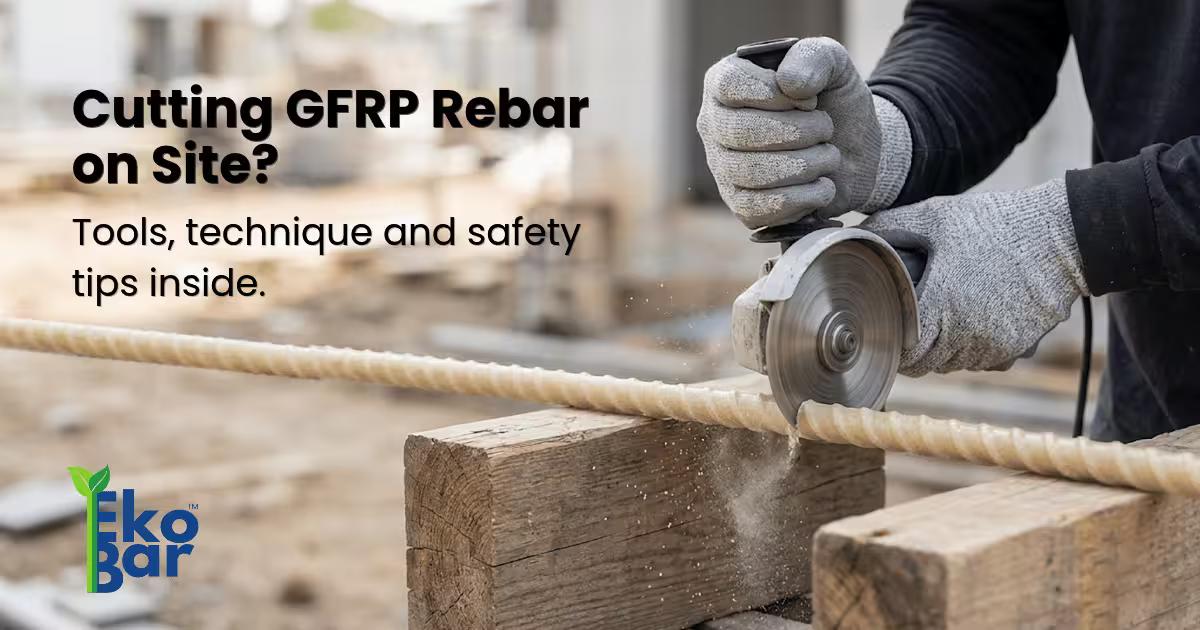
GFRP (glass fibre reinforced polymer) rebar is now a practical choice for drains, slabs, retaining walls and coastal structures. It is lightweight, corrosion-resistant and easy to handle on site. But GFRP is not steel, and it should not be cut like steel.
Cutting GFRP rebar is simple once your site team knows the right tools and a few basic precautions. This guide covers what to use, how to get a clean cut, and how to keep workers safe.
Why GFRP Needs a Different Cutting Approach
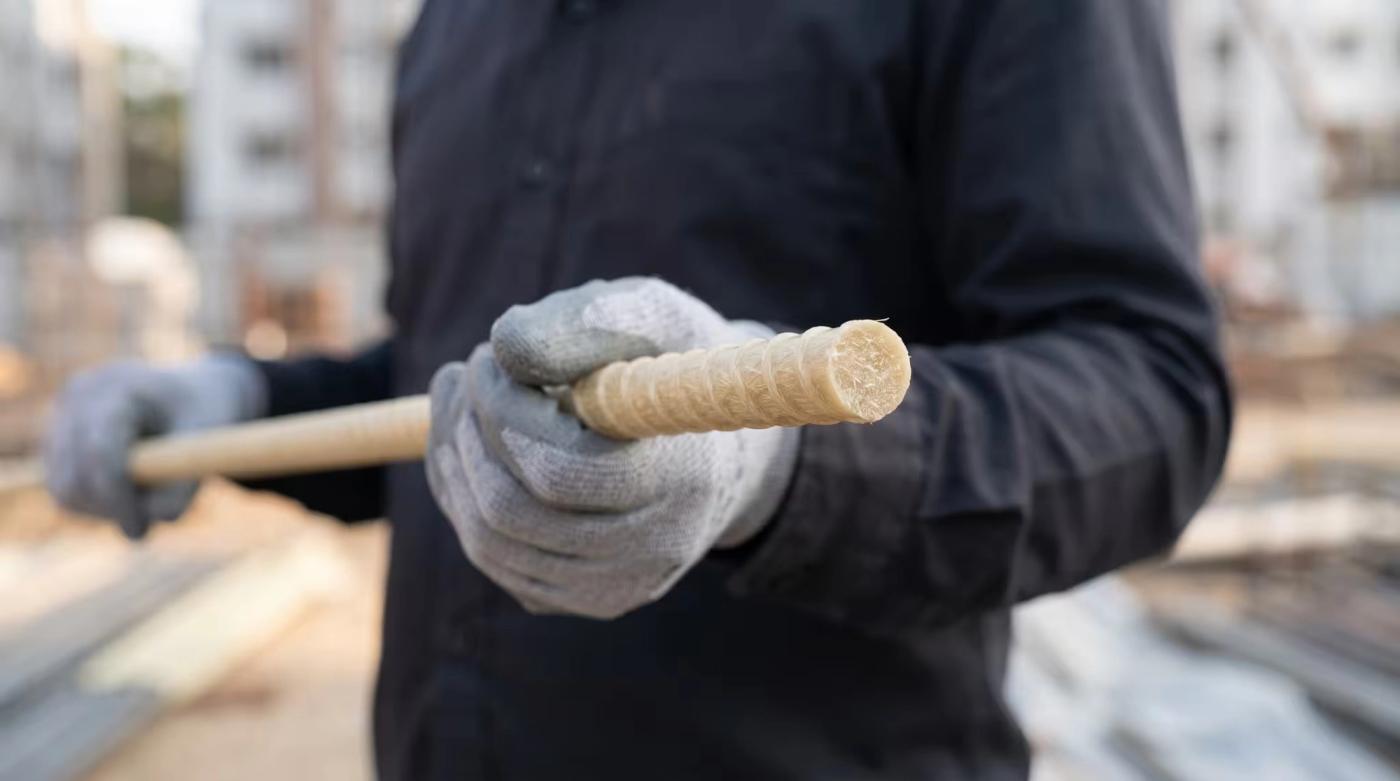
GFRP rebar is made of thousands of continuous glass fibres bound together in resin. Cut it the wrong way and those fibres can crush, split or fray at the ends, leaving a damaged bar.
Cutting also creates fine glass-fibre dust, which can irritate the skin, eyes and lungs if workers are not protected.
There is one more difference site team should know: GFRP rebar cannot be bent on site the way steel can. Bends are made at the factory. That makes cutting the main change your team will make on site, so it is worth doing right.
Recommended Tools for Cutting GFRP Rebar
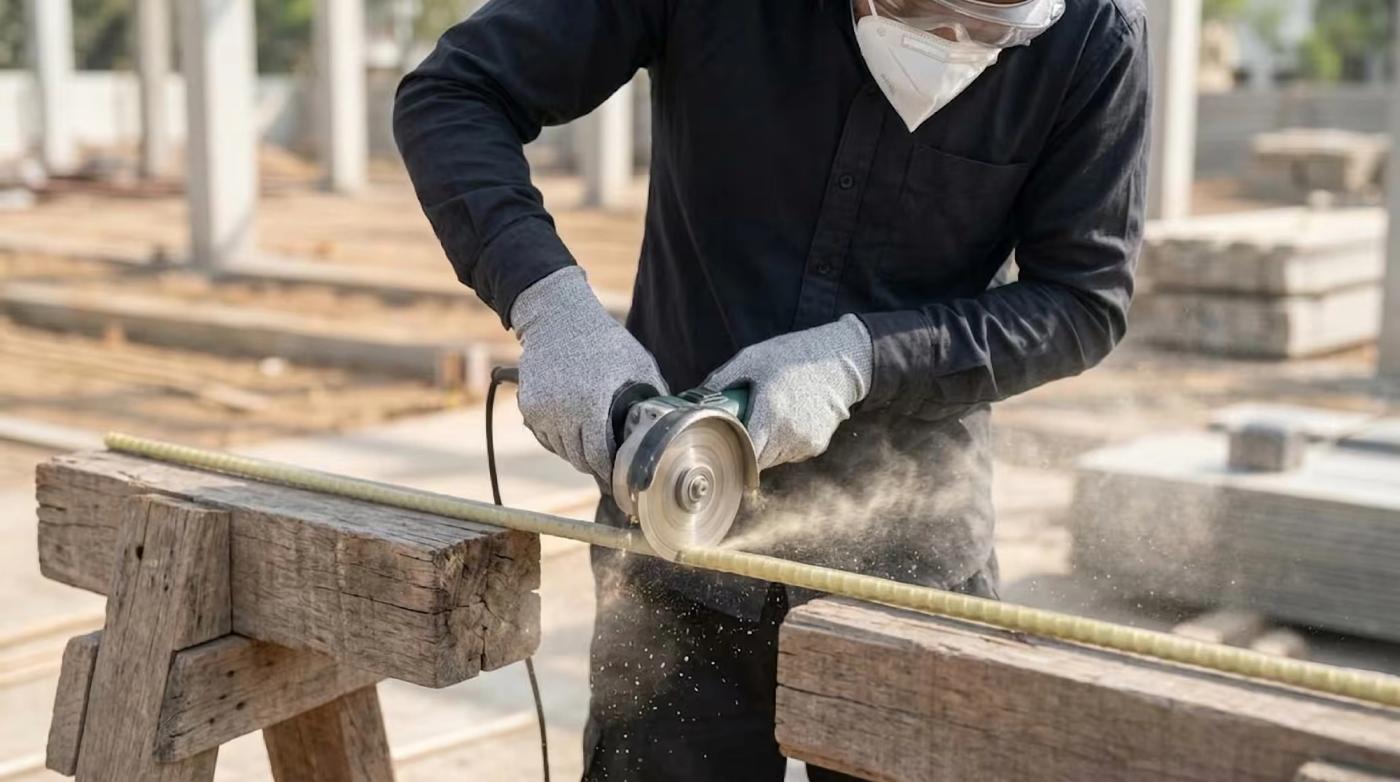
The rule is simple: GFRP should be cut with an abrasive or diamond edge, not sheared or burned.
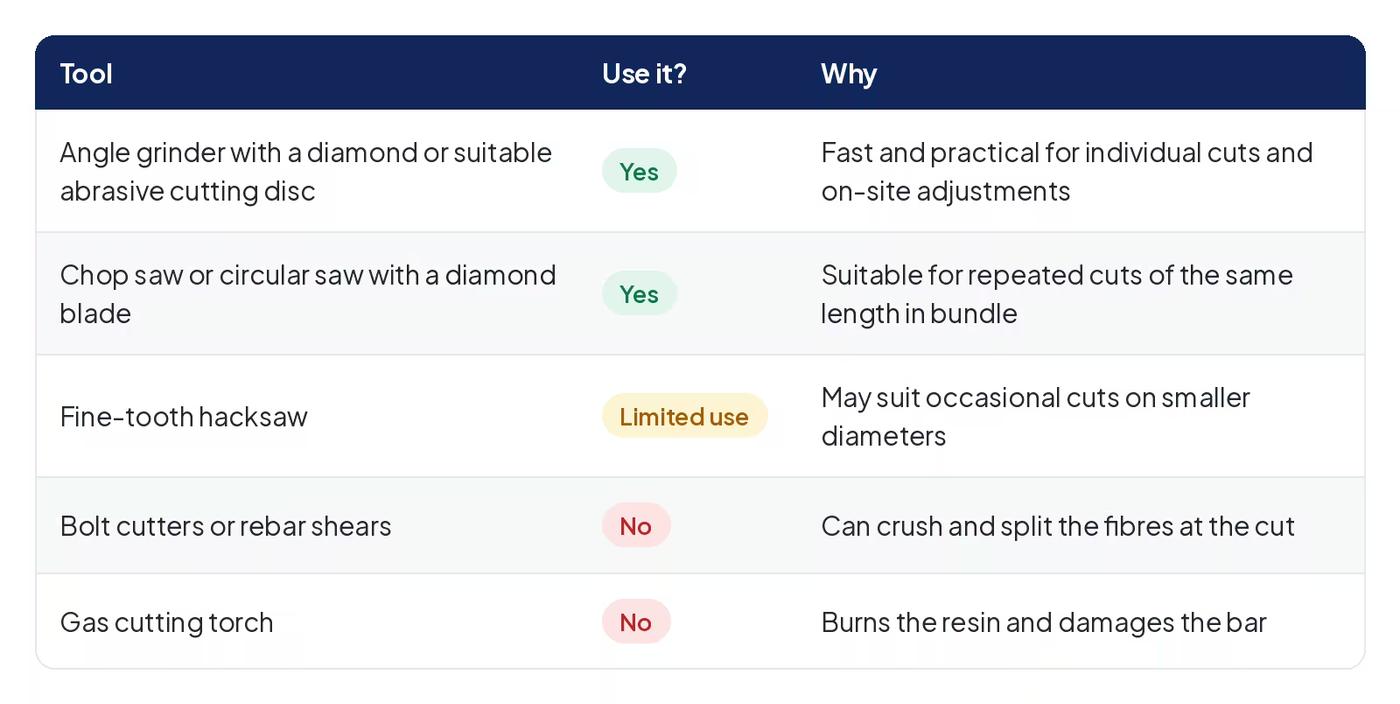
Diamond blades are generally preferred for cutting abrasive glass-fibre composites. For project-specific guidance on blades and equipment, contact the EkoBar team.
Step-by-Step Cutting Technique
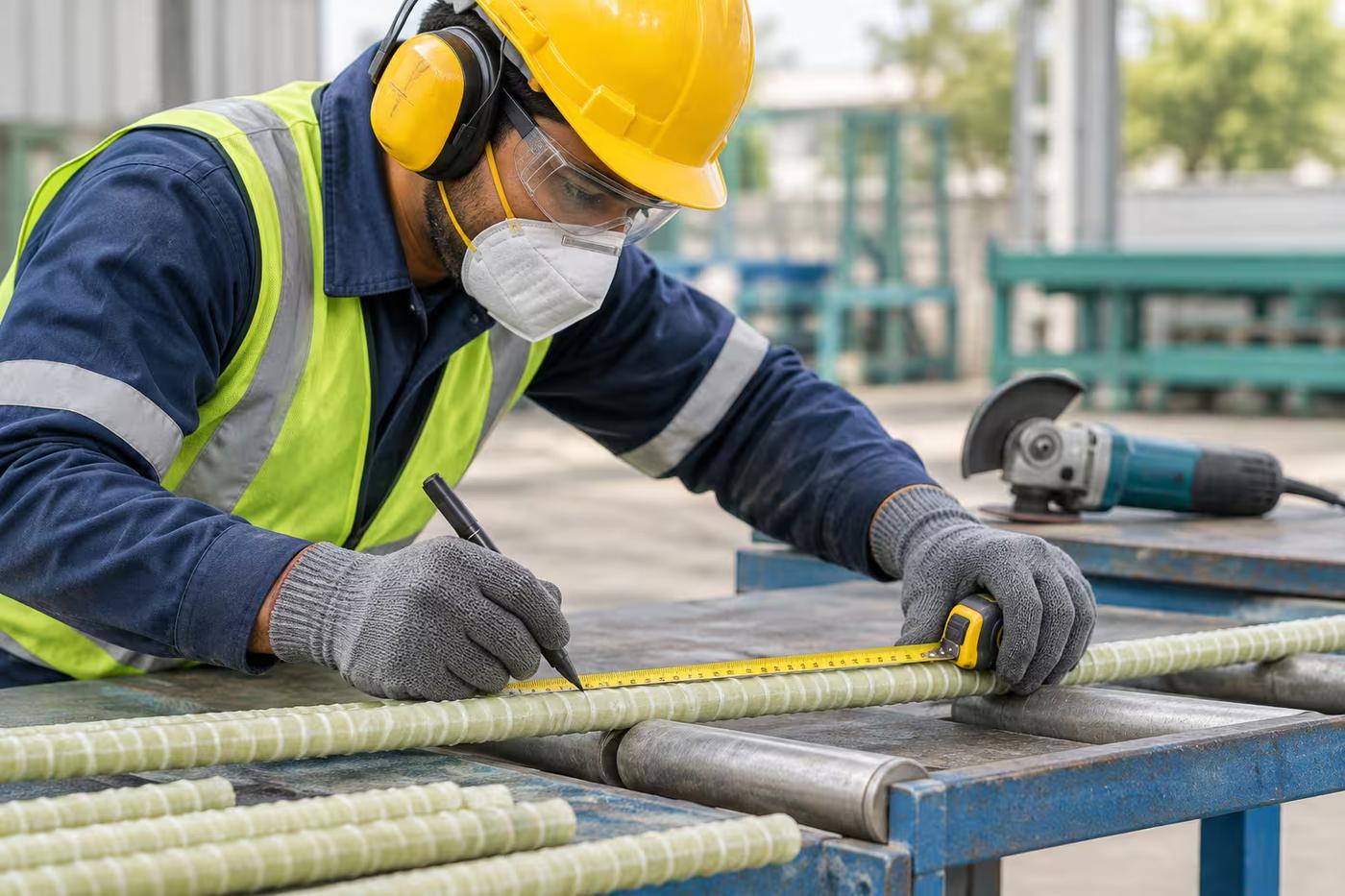
- Measure and mark. Mark the cut line clearly with a marker. Take lengths from the drawings or bar schedule, since the bar cannot be bent or adjusted later.
- Support the bar. Rest the bar on a stable surface with support on both sides of the cut. This stops it from sagging and pinching the blade. Clamp it if needed.
- Let the tool do the work. Use steady, moderate pressure. Forcing the blade can chip the edges and overheat the disc.
- Cut all the way through. Don't snap the last part by hand. A partial cut leaves splintered, uneven ends.
- Check the ends. A good cut is clean and circular. Inspect for loose or exposed fibres. If project specifications require end sealing, follow the specified procedure.
Safety on Site
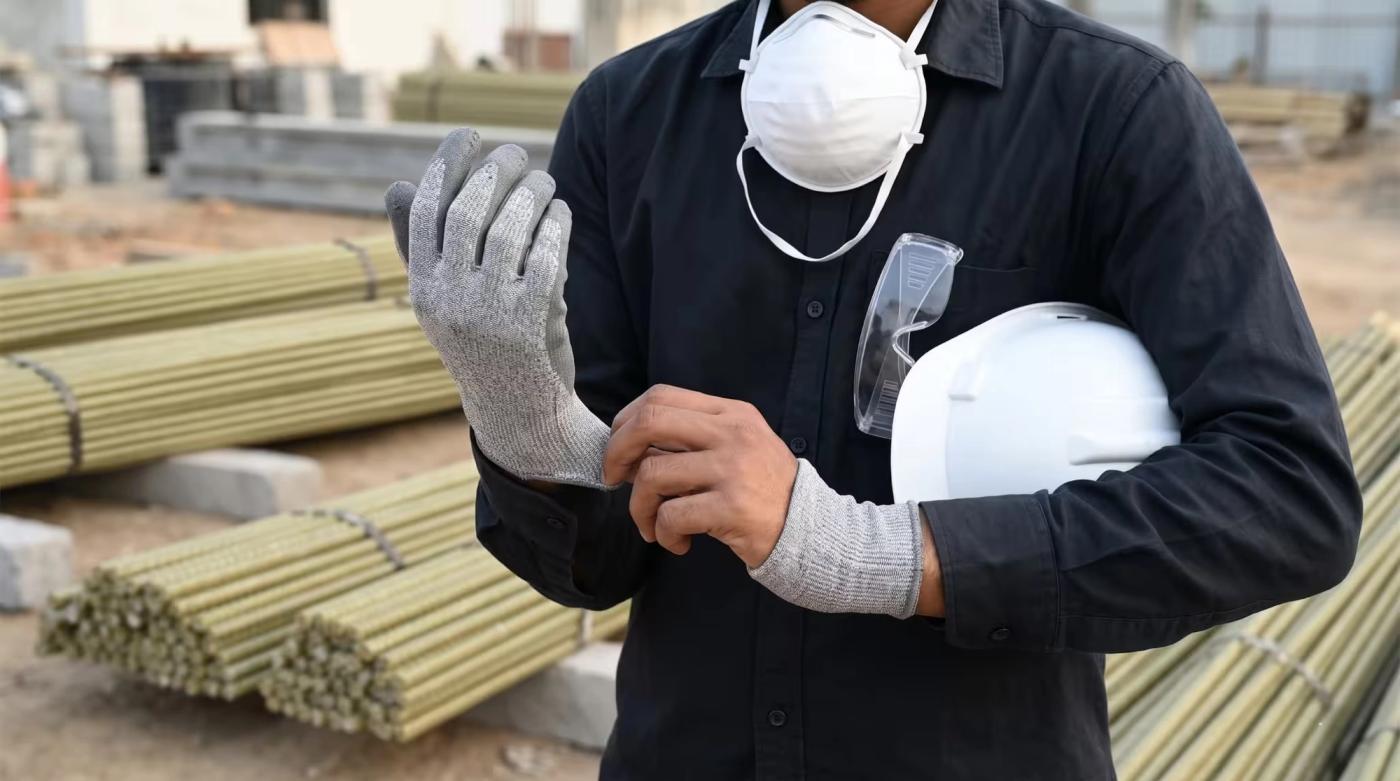
Most GFRP cutting risks come from dust and fibre splinters. A few simple habits take care of both.
- Wear the right PPE. Use suitable respiratory protection, such as an N95 or equivalent where appropriate, safety goggles, gloves and full-sleeve clothing. Respiratory protection should be selected based on the site's dust-risk assessment.
- Control the dust. Cut outdoors or in a well-ventilated area. Where possible, use a tool with suitable dust extraction or a manufacturer-approved wet-cutting system compatible with the equipment.
- Set a cutting zone. Fix one cutting spot away from other workers and walkways, so dust doesn't spread across the site.
- Clean up properly. Use suitable industrial dust extraction or an approved cleaning method to collect dust and off-cuts. Avoid blowing dust away with compressed air. Workers should wash their hands before eating or drinking.
- Follow basic tool safety. Keep guards on grinders, use discs rated for the tool's speed, and disconnect power before changing blades.
Plan Your Cuts to Reduce Waste
Since GFRP bars cannot be bent on site like conventional steel reinforcement, good planning saves both material and time.
- Prepare a cutting list from the drawings before work starts.
- Group cuts of the same length together and do them in one go.
- Measure twice before cutting. A bar cut short cannot be corrected on site.
- Check with your supplier whether bars can be supplied in lengths that suit your project.
Getting the Cut Right
Cutting GFRP rebar is not difficult. It just needs the right tool, a steady technique and basic dust protection. Use a diamond or suitable abrasive blade, support the bar well, cut fully through, and keep your team in proper PPE.
EkoBar GFRP Rebar
Made by ZippMat at Dobbaspet, Bangalore — the first and only GFRP manufacturer in Bangalore.
Lightweight, corrosion-resistant reinforcement with 1000+ MPa tensile strength, built for long-lasting concrete structures.
Explore EkoBar GFRP
ZippMat Pvt Ltd | EkoBar
contact@zippmat.com · +91 93640 07918 · www.ekobar.in